

Poor packing is one of the most underestimated problems on long journeys. A forgotten first aid kit, a bag that takes ten minutes to unpack just to find a phone charger, or a cooler wedged behind three other bags can turn an exciting trip into a frustrating ordeal. Whether you’re a professional driver covering thousands of kilometres each week, a family loading up the car for a summer adventure, or a backpacker heading into the wilderness, how you pack directly affects how you feel, how safe you are, and how much you enjoy the journey. This guide covers practical, evidence-backed strategies to help you pack smarter, stay organised, and travel with genuine confidence.
Table of Contents
- Preparing for your long journey: Essential planning and prerequisites
- Choosing and organising your packing system
- Must-have essentials for comfort, health, and safety
- Troubleshooting and verification: Common mistakes, checks, and last steps
- Our perspective: Why efficient packing is the real travel game changer
- Related solutions: Safety and comfort gear for your journey
- Frequently asked questions
Key Takeaways
| Point | Details |
|---|---|
| Preparation is crucial | Mapping needs, weather, and journey type sets up your packing for success. |
| Organisation saves time | Smart packing systems cut down daily frustration and can save travellers hours each week. |
| Comfort and safety matter | Choosing the right essentials directly boosts wellness, sleep, and accident prevention on the road. |
| Final checks reduce risks | A systematic verification routine before departure avoids common mistakes and ensures readiness. |
| Efficient packing pays off | Investing in good packing delivers measurable productivity and financial benefits, especially for professionals. |
Preparing for your long journey: Essential planning and prerequisites
Before you touch a single bag, you need a clear picture of what your journey actually demands. A professional driver doing a five-day haul has completely different needs from a family on a weekend camping trip. Start by identifying your journey type: road trip, rail travel, backpacking, or commercial driving. Each comes with its own priorities around comfort, safety, and access.
Once you know your journey type, set your packing priorities. Ask yourself what you need to reach quickly, what can stay buried at the bottom, and what is non-negotiable for safety. From there, build a detailed checklist. Do not rely on memory. A written or digital list prevents the classic last-minute panic of wondering whether you packed the children’s medication or the emergency torch.
For families, the checklist should include items for every member, including snacks, entertainment, and medical supplies. For adventure enthusiasts, weight and weather protection become critical. For professional drivers, packing supply tips confirm that a well-structured kit is not just convenient but essential for daily performance. In fact, organisation saves 30 minutes per day for professional drivers, which adds up to over 180 hours annually.
Pro Tip: Build your checklist around three columns: must-have, nice-to-have, and leave behind. This simple framework cuts packing time and prevents overpacking.
Use the table below to identify core priorities by traveller type:
| Traveller type | Top priority | Key items |
|---|---|---|
| Families | Safety and comfort | First aid kit, snacks, entertainment, blankets |
| Adventure enthusiasts | Weight and weather | Lightweight gear, waterproofs, navigation tools |
| Professional drivers | Organisation and rest | Bedding, food storage, safety vest, tool kit |
Also check the weather forecast for your entire route, not just your destination. A sunny start can turn into a cold night stop. Review packing smart essentials and the road trip gear checklist to make sure your preparation covers every scenario before you zip up a single bag.
Choosing and organising your packing system
Once you’ve defined what to pack, it’s time to choose and set up the right packing system. The container you choose matters as much as what goes inside it. Backpacks suit hikers who need weight distribution and mobility. Modular storage bins work brilliantly in vehicles, allowing you to stack and label sections. Hard-shell luggage protects valuables but offers less flexibility. For cab-based travel, a combination of bunk nets, hanging organisers, and labelled bins is widely considered the gold standard.
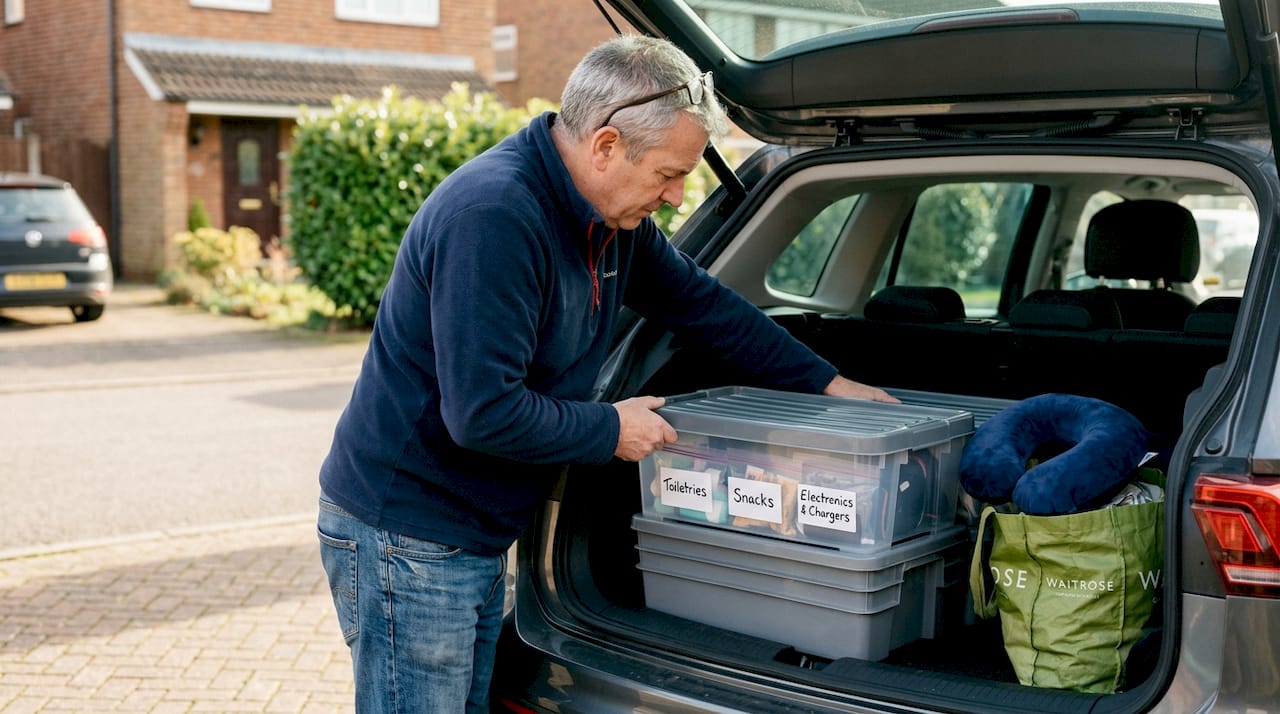
The key principle of any good packing system is hierarchy of access. Items you need daily, such as snacks, a phone charger, or a water bottle, should sit at the very top or in a dedicated side pocket. Items you only need at the end of the journey, like spare clothing or tools, can go at the bottom or in harder-to-reach sections.
Here is a step-by-step approach to building your system:
- Group items by category: food, clothing, health, safety, and entertainment.
- Within each category, separate daily-use from occasional-use items.
- Pack occasional-use items first, then layer daily-use items on top.
- Label every container or section clearly.
- Run a quick test: close everything up, then retrieve your three most-needed items in under 30 seconds.
For vehicle-based travellers, vehicle comfort organisation offers excellent guidance on turning a cab or car interior into a genuinely functional space. A shower caddy hung behind a seat, for example, keeps small items visible and within reach without taking up floor space.
Pro Tip: Use a shower caddy or hanging mesh pocket for small daily essentials in your vehicle. It keeps things visible, accessible, and prevents the dreaded rummage-through-everything moment.
Professional drivers who use organised cab storage with bunk nets, storage bins, and a full essentials kit report measurable gains in comfort and productivity. The packing checklist for moves also reinforces that systematic labelling and grouping reduces errors and stress significantly. Avoid the two most common mistakes: mixing clean and dirty clothing in the same bag, and burying essential items under everything else. These small errors cause disproportionate frustration on the road. Review comfortable travel tips for additional strategies on keeping your travel space functional over long periods.
Must-have essentials for comfort, health, and safety
With your packing system in place, let’s focus on the essentials that will make the journey safe and comfortable. This is where most travellers underinvest. They pack clothing and food but overlook the items that genuinely protect health and wellbeing over extended periods.
Comfort essentials make a measurable difference, particularly for overnight or multi-day journeys. A quality memory foam topper, plush pillow, and personal blanket are not luxuries for professional drivers. They are performance tools. Poor sleep on the road leads to slower reaction times and higher accident risk. In fact, a memory foam topper reduces accidents by up to 40% and improves reaction time by 25%. That is a compelling reason to prioritise bedding.
“A memory foam topper can reduce accident risk by up to 40%.”
Health essentials should be non-negotiable for every traveller type. Pack a first aid kit, any regular medications, sanitation supplies such as hand sanitiser and wet wipes, and a basic pain relief kit. Families travelling with children should also include any prescribed items and a thermometer.
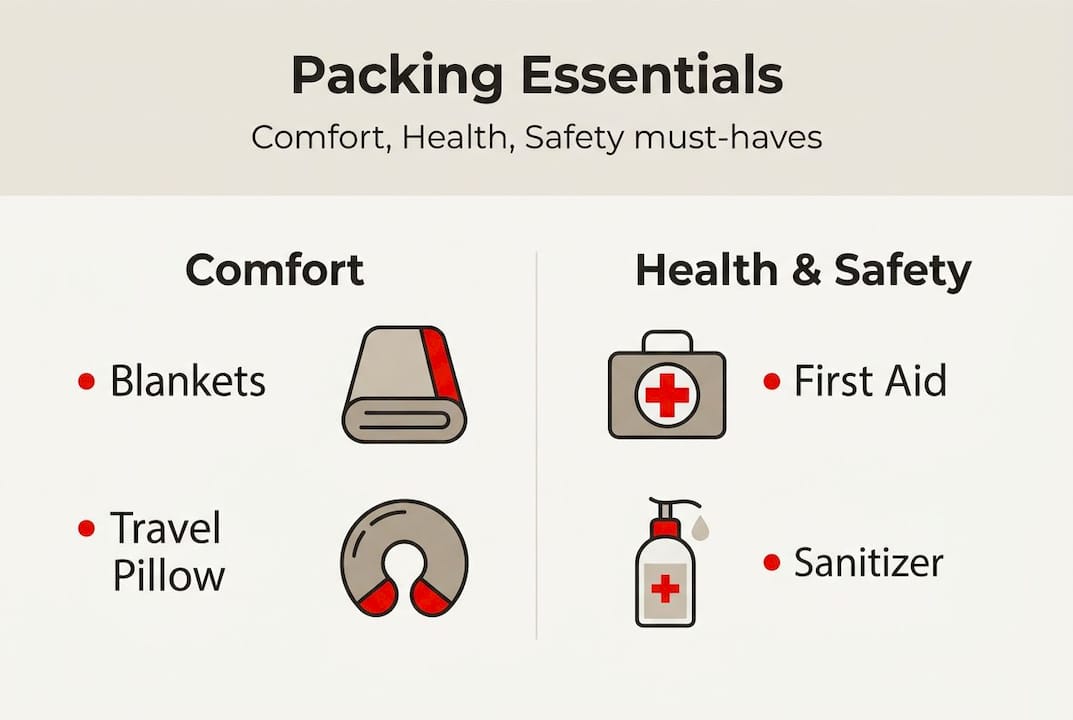
Safety gear varies by journey type but always matters. Drivers should carry reflective vests, a warning triangle, and a basic tool kit. Adventure enthusiasts need a helmet, navigation backup, and an emergency whistle. Families benefit from a torch, a portable phone charger, and a list of emergency contacts in a physical format.
For food and hydration, expert packing tips and backpacking guidelines recommend 1.5 to 2.5 pounds of food per person per day, with a calorie target of 2,500 to 4,500 depending on activity level. Always carry at least two litres of water per person per day.
| Item category | Families | Adventurers | Professional drivers |
|---|---|---|---|
| Bedding | Blankets, travel pillows | Sleeping bag, mat | Memory foam topper, pillow |
| Health | First aid, medications | First aid, blister kit | First aid, pain relief |
| Safety | Torch, charger | Helmet, whistle | Reflective vest, tool kit |
| Food and water | Snack packs, cooler | Lightweight meal packs | Cooler, meal prep containers |
For a full breakdown of what to carry, see essential travel accessories, long trip preparation, and guidance on managing travel fatigue to keep alertness high throughout.
Troubleshooting and verification: Common mistakes, checks, and last steps
You’ve packed the essentials. Now ensure nothing is overlooked before you set out. The final verification stage is where careful travellers catch the mistakes that everyone else discovers 200 kilometres down the road.
Start with a timed access test. Close all your bags and containers, then retrieve your five most critical items as quickly as possible. If any of them take more than 30 seconds to locate, reorganise. This simple test reveals hidden packing problems instantly.
Work through this final checklist before departure:
- Confirm all safety items are packed and accessible: first aid kit, reflective vest, torch.
- Check food and water quantities against your journey duration.
- Verify all medications and health supplies are present.
- Secure all loose items in the vehicle to prevent movement during transit.
- Double-check high-value items: passport, wallet, keys, phone, and chargers.
- Review the weather forecast one final time and adjust clothing layers if needed.
- Confirm all containers are properly closed and labelled.
Common last-minute mistakes include overpacking clothing while underpacking health supplies, forgetting to account for temperature changes overnight, and placing frequently needed items at the bottom of bags. A well-organised kit, as supported by long-distance packing guidance, directly improves both safety and productivity on the road.
Pro Tip: Pre-arrange a small “arrival bag” with the items you’ll need in the first 30 minutes of stopping: toiletries, a change of clothes, and your charger. It saves enormous time and frustration after a long drive.
For professional drivers, organisation and a full essentials kit yields measurable productivity and financial gains, reinforcing that this final stage is worth every minute. Check packing like a pro for additional last-step strategies, and review travel routines for calmness to build a pre-departure habit that keeps stress low and confidence high.
Our perspective: Why efficient packing is the real travel game changer
Most guides treat packing as a chore to get through before the real journey begins. We see it differently. After years rooted in the transport industry, we’ve observed that the travellers who arrive in the best shape, whether professional drivers or families on holiday, are almost always the ones who invested time in their packing system before departure.
The numbers support this. A full essentials kit for drivers yields up to £70,000 in annual benefits and saves around 180 hours per year. That is not a minor convenience. That is a genuine return on a small upfront investment of time and thought.
Beyond the financial case, packing well reduces cognitive load. When you know exactly where everything is, you make better decisions on the road. You stay calmer, react faster, and enjoy the journey more. The road trip gear you choose and how you organise it sets the tone for everything that follows. Packing is not peripheral. It is the foundation.
Related solutions: Safety and comfort gear for your journey
If you’re ready to upgrade your travel experience, consider specialised solutions for safety and comfort. The right gear does not just fill a bag. It actively protects you and makes every kilometre more manageable.

At Convoy, we’ve built our product range around the realities of long journeys. Our high visibility safety vest ensures you’re seen in any roadside situation, while the ventilated safety helmet offers reliable head protection for adventurers and cyclists. For drivers carrying valuable cargo or equipment, the cargo protection alarm provides peace of mind at every stop. Each product is designed with the practical demands of real travel in mind, not just the ideal scenario.
Frequently asked questions
What is the most efficient way to organise luggage for a long journey?
Divide your items by category and accessibility, use modular packing solutions, and label everything clearly. Organised packing saves professional drivers significant time daily and reduces stress for all traveller types.
What are the recommended food and hydration packing guidelines?
Aim for 1.5 to 2.5 pounds of food per person per day, targeting 2,500 to 4,500 calories depending on activity level, plus at least two litres of water per person daily.
How can professional drivers reduce fatigue and improve safety during long journeys?
Invest in quality comfort bedding and ensure all safety gear is packed before departure. A memory foam topper improves reaction time by 25% and reduces accident risk by up to 40%.
What should be checked right before departure to avoid packing mistakes?
Run through a final checklist covering safety, food, health, and high-value items, then test quick access to your five most critical items. Excellent organisation and a complete essentials kit directly improve both productivity and safety on the road.
Recommended
- Essential road trip gear: maximise safety, comfort, and fun – Convoy Vibe
- Essential travel accessories every frequent traveller needs – Convoy Vibe
- How to Pack Smart: What Travelers Really Need – Convoy Vibe
- How to Stay Comfortable During Long Hours on the Road – Convoy Vibe
- Packing tips for moving: expert steps for a stress-free move